
10 Signs You're Overwatering Your Plants
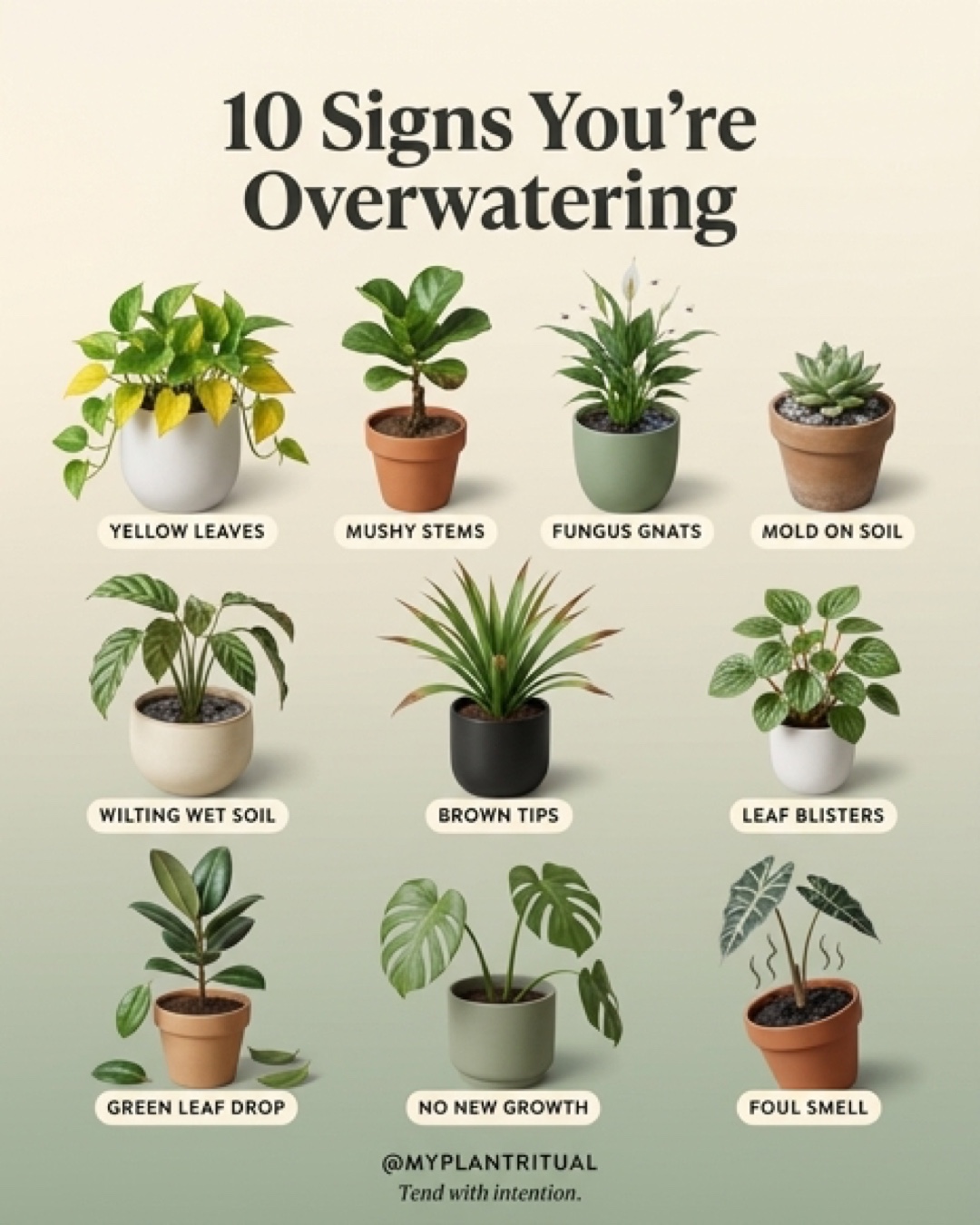
Overwatering is the single most common reason houseplants don't make it. It comes from a good place — you care, so you water. But more water doesn't mean more love. Sometimes the kindest thing you can do is put the watering can down.
The good news is that your plant will tell you when something's off. You just need to know what to look for. Here are ten signs that your plant is getting more water than it can handle.
1. Yellow lower leaves
When the oldest leaves at the base of your plant start turning yellow, it's often a sign that the roots are sitting in too much moisture. Waterlogged soil pushes out oxygen, and without it, roots can't absorb nutrients properly. The plant starts sacrificing its oldest leaves first because they're the least efficient.
What to do: Let the soil dry out completely before your next watering. If the yellowing is widespread, check the roots — healthy roots are white and firm, not brown and mushy.
2. Mushy stems
Stems that feel soft or spongy to the touch are a red flag. When excess water lingers around the base of the plant, rot-causing bacteria and fungi move in fast. Once the stem tissue breaks down, it can't transport water or nutrients to the rest of the plant.
What to do: If only one or two stems are affected, trim them back to healthy tissue with clean scissors. Repot in fresh, dry soil and hold off on watering for several days.
3. Fungus gnats
Those tiny flies hovering around your plant aren't random visitors. Fungus gnats lay their eggs in consistently moist soil, and their larvae feed on organic matter and fine roots. A gnat problem almost always means your soil is staying wet for too long between waterings.
What to do: Let the top two inches of soil dry out between waterings — this breaks the gnat breeding cycle. You can also add a thin layer of sand on top of the soil to discourage egg-laying.
4. Mold on the soil surface
White or gray fuzzy patches on your soil mean there's too much moisture and not enough airflow. Mold thrives in damp, stagnant conditions. While the mold itself usually isn't harmful to your plant, it's a clear signal that the soil environment is too wet.
What to do: Scrape off the moldy layer, improve air circulation around the plant, and reduce your watering frequency. Make sure the pot has drainage holes and that water isn't pooling in the saucer.
5. Wilting despite wet soil
This one trips people up. The plant looks wilted, so you reach for the watering can — but the soil is already damp. When roots are waterlogged, they actually lose the ability to absorb water. So even though there's plenty of moisture around, the plant can't access it. It wilts from thirst while sitting in water.
What to do: Resist the urge to add more water. Remove the plant from its pot, let the root ball air out for a few hours, then repot in fresh soil. Only water once the top inch feels dry.
6. Brown, mushy leaf tips
If the tips of your leaves are turning brown and feel soft or mushy (not dry and crispy), that's a sign of overwatering. Excess water pressure causes plant cells to swell and burst, starting at the most vulnerable points — the leaf edges and tips.
What to do: Trim the brown tips with clean, sharp scissors. Adjust your watering schedule so the soil has time to partially dry between waterings.
7. Leaf blisters or edema
Small raised bumps or blisters on the undersides of leaves are a sign of edema. This happens when the plant absorbs water faster than it can release it through transpiration. The excess pressure causes cells to expand and sometimes rupture, leaving corky, bumpy patches.
What to do: Move the plant to a spot with better airflow and brighter light to increase transpiration. Cut back on watering and let the soil dry more between sessions. The existing blisters won't heal, but new growth should come in clean.
8. Healthy green leaves falling off
When leaves that still look perfectly green start dropping, it's a stress response. The plant is essentially shedding weight to survive. Overwatering disrupts the root system, and when roots can't function properly, the plant can't support all of its foliage — even the healthy-looking stuff.
What to do: Check the soil moisture immediately. If it's soggy, stop watering and let it dry out. Consider whether the pot size is too large for the plant, as oversized pots hold more moisture than roots can use.
9. No new growth
If your plant has stalled — no new leaves, no new shoots, nothing — during the growing season, compromised roots might be the reason. When roots are constantly waterlogged, they lose the ability to take up nutrients. Without a steady supply of nitrogen, phosphorus, and potassium, the plant simply can't produce new growth.
What to do: Ease up on watering and consider repotting with fresh, well-draining soil. A pot with adequate drainage holes is essential. Once the roots recover, you should see new growth return within a few weeks.
10. A foul smell from the soil
If your plant's soil smells sour, rotten, or swamp-like, that's anaerobic bacteria at work. When soil stays perpetually wet, oxygen gets pushed out, and bacteria that thrive without oxygen take over. They produce that distinctive rotten-egg smell as they break down organic matter in the soil.
What to do: This usually means root rot has set in. Unpot the plant, trim away any dark, mushy roots, and repot in fresh, well-draining mix. Sterilize the pot before reusing it. Going forward, always check the soil before watering.
The golden rule
When in doubt, don't water. It's almost always easier for a plant to recover from being a little too dry than from being too wet. Dry soil is a problem you can fix in five minutes. Root rot is a problem that might take weeks — if the plant pulls through at all.
Before you water, stick your finger an inch or two into the soil. If it still feels moist, wait another day or two. Your plant isn't on a schedule, and neither should your watering be. Pay attention to what the soil and the plant are telling you, and you'll get the balance right.