
10 Plants for Your Bathroom
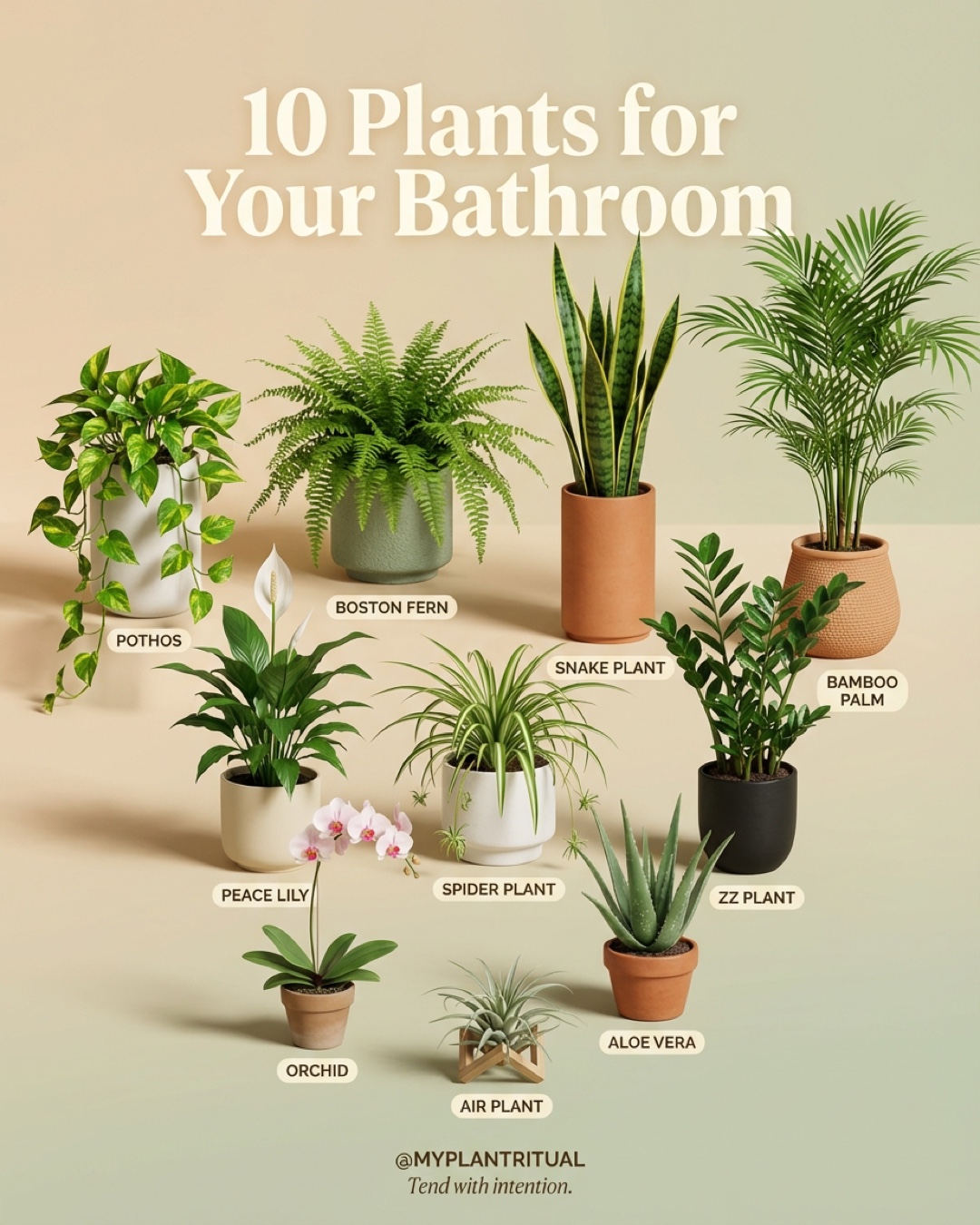
Your bathroom is already a greenhouse — you just haven't planted it yet. The warm, humid air from daily showers creates the perfect microclimate for tropical plants that would struggle in drier rooms. And many of these species handle low light without complaint, which is exactly what most bathrooms offer.
Here are ten plants that will feel right at home next to your towels.
1. Pothos (Epipremnum aureum)
Pothos is the go-to trailing plant for a reason. It thrives in the warm, steamy conditions of a bathroom and looks stunning draped over a shelf or hanging from a hook near the ceiling. Even with minimal light, it keeps pushing out new leaves.
- Light: Low to bright indirect — it's not picky.
- Water: Let the top inch of soil dry out between waterings. The bathroom humidity does a lot of the heavy lifting.
- Bonus: One of the fastest-growing houseplants. You'll have vines reaching the floor in no time.
2. Boston Fern (Nephrolepis exaltata)
Humidity is the Boston Fern's love language. In most rooms, you'd need to mist it constantly or set up a pebble tray. In the bathroom, it gets all the moisture it craves naturally. Hang it near the shower and watch it flourish.
- Light: Bright indirect light is ideal, but it tolerates medium light well.
- Water: Keep the soil consistently moist — never let it dry out completely.
- Bonus: Boston Ferns are excellent air purifiers, removing formaldehyde and other common pollutants.
3. Snake Plant (Sansevieria trifasciata)
If your bathroom has little to no natural light, the Snake Plant is your best friend. It tolerates deep shade, irregular watering, and temperature swings. The upright, architectural leaves add structure to any corner without needing much floor space.
- Light: Low to bright indirect — genuinely thrives in near-darkness.
- Water: Every 2–3 weeks. It stores water in its thick leaves, so err on the side of underwatering.
- Bonus: One of the few plants that releases oxygen at night, making it a great bedroom or bathroom companion.
4. Peace Lily (Spathiphyllum wallisii)
The Peace Lily blooms in low light — something very few flowering houseplants can claim. Its elegant white spathes brighten up dim bathrooms, and it's one of the top-performing air-cleaning plants according to NASA's classic study.
- Light: Low to medium indirect. Direct sun will scorch the leaves.
- Water: Water when the top inch of soil feels dry. It'll droop dramatically when thirsty, then bounce right back.
- Bonus: The glossy dark leaves are natural dust magnets — a quick wipe keeps them looking lush.
5. Spider Plant (Chlorophytum comosum)
Spider Plants handle moisture swings without drama, making them a natural fit for bathrooms where humidity spikes after every shower and drops in between. They're fast growers that produce cascading "babies" you can propagate and share.
- Light: Bright indirect is best, but medium light works fine.
- Water: Water when the top inch of soil dries out. They're forgiving if you forget.
- Bonus: Non-toxic to cats and dogs — a rare perk among popular houseplants.
6. Orchid (Phalaenopsis spp.)
That bathroom windowsill might just be the dream spot your orchid has been waiting for. Phalaenopsis orchids love the combination of warm temperatures, bright filtered light, and ambient humidity — conditions that bathrooms provide effortlessly.
- Light: Bright indirect light. A window with a sheer curtain is perfect.
- Water: Water once a week by soaking the roots for 10–15 minutes, then let them drain completely.
- Bonus: Orchids can rebloom for years if you cut the spike above a node after flowers drop.
7. Aloe Vera (Aloe barbadensis miller)
Aloe Vera needs a bright window, so this one's best for bathrooms that get decent sunlight. In return, it'll love the extra humidity and reward you with plump, gel-filled leaves you can use for minor burns and skin care.
- Light: Bright direct or indirect light. A south- or west-facing window is ideal.
- Water: Every 2–3 weeks. Let the soil dry out completely between waterings.
- Bonus: Break off a leaf and use the gel directly on sunburns, small cuts, or dry skin.
8. ZZ Plant (Zamioculcas zamiifolia)
The ZZ Plant thrives on neglect in dim corners — which sounds like most bathrooms. Its glossy, dark green leaves look almost artificial in how perfect they stay, even when you forget about it for weeks. It stores water in thick underground rhizomes, so overwatering is the only real risk.
- Light: Low to bright indirect. Truly one of the most shade-tolerant houseplants.
- Water: Every 2–3 weeks at most. Let the soil dry out fully.
- Bonus: New growth emerges as bright, lime-green shoots that gradually darken — it's surprisingly fun to watch.
9. Bamboo Palm (Chamaedorea seifrizii)
If you want your bathroom to feel like a tropical resort, the Bamboo Palm is the plant to get. Its feathery fronds add instant warmth and texture, and it handles low light beautifully. It's one of the larger options on this list, so give it a floor spot with a bit of room to spread.
- Light: Low to medium indirect light. Avoid direct sun, which can burn the fronds.
- Water: Keep the soil lightly moist. Don't let it sit in standing water.
- Bonus: NASA rated the Bamboo Palm as one of the best plants for filtering airborne toxins like benzene and formaldehyde.
10. Air Plant (Tillandsia spp.)
No soil. No pot. No fuss. Air Plants absorb moisture and nutrients through their leaves, which means the humid air in your bathroom is essentially a free meal. Display them on a shelf, in a glass globe, or mounted on driftwood.
- Light: Bright indirect light is best, but they manage in medium light too.
- Water: Mist them 2–3 times a week, or give them a 20-minute soak once a week.
- Bonus: There are over 650 species of Tillandsia, so you can build a collection with wildly different shapes and textures.
Getting Started
You don't need to fill your bathroom with all ten at once. Pick one or two that match the light your bathroom gets — a Snake Plant or ZZ Plant for dim spaces, an Orchid or Aloe for brighter windows — and see how they settle in. Once you see how well plants do in that warm, humid air, you'll probably want to add more.